A steam cleaner heats water under pressure and converts it into high-temperature steam to clean. Heat dissolves grease and dirt, while pressure blasts it off the surface. No detergent is needed — you should never put detergent in the boiler.
But there is one thing the videos online don't tell you: steam can cause permanent damage to certain surfaces. This article clearly explains where it works best and where you should avoid using it.
First, let's set the right expectations: it's not a vacuum cleaner
This is the most common disappointment. A steam cleaner does not collect dust and loose dirt ; it dissolves it and spreads it across the surface. That's why you should follow this order:
- First, sweep or vacuum
- Then steam
- The microfiber pad/cloth will pick up the loosened dirt
If you skip this order, you'll end up with a muddy surface and blame the device.
What does "bar" mean?
Bar measures steam pressure and directly determines two things: the temperature of the steam and the force with which it hits the surface. The higher the pressure, the hotter the steam and the more deeply it blasts away dirt.
- Below 3 bar — it's like blowing moist air; it struggles with stubborn grease
- 4 bar — the start of the effective range for household use (FG-B2)
- 5 bar — for tough jobs like oven grease, stove residue, and mold in grout (FG-B1)
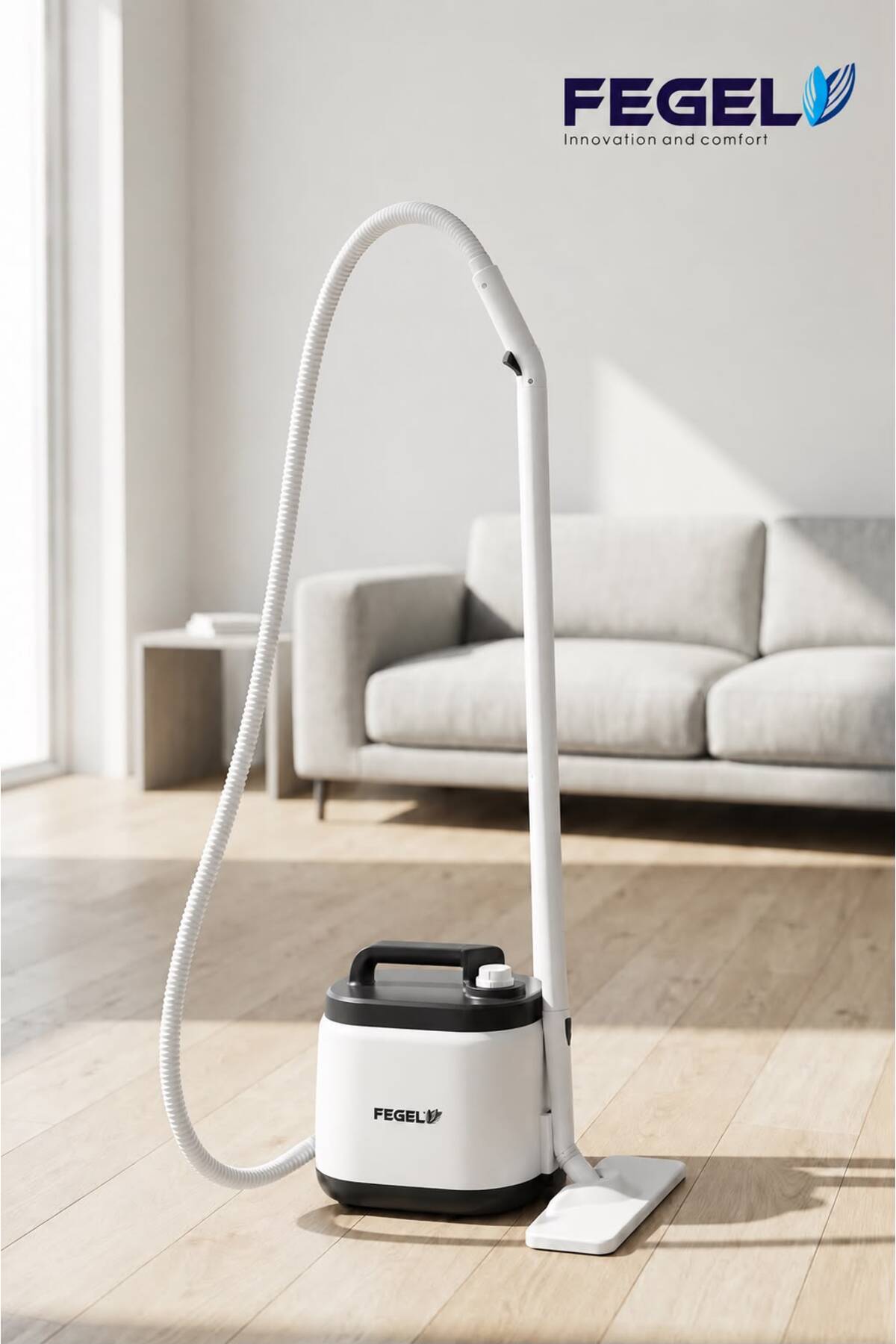
The boiler capacity is just as important as the pressure: a small-tank device will run out in 10 minutes, and you'll have to wait for it to heat up again. The FG-B1's 1500 ml stainless steel boiler provides approximately 45 minutes of continuous steam; it takes 8–10 minutes to heat up.
✅ Surfaces you can clean with steam
- Tile, ceramic, and granite floor tiles — its primary use
- Grout lines — with the brush attachment, the steam cleaner produces its most visible results here
- Bathroom: shower enclosures, fixtures, around the toilet, and bathtub silicone (as long as it's intact)
- Kitchen: stove, range hood filters, inside the oven, between the countertop and backsplash, refrigerator seals
- Glass and mirrors — with the glass squeegee attachment, without leaving streaks
- Fabric surfaces: sofas, beds, curtains — from a distance and with short contact, against dust mites
- Children's toys, high chairs, strollers — especially suitable because it leaves no chemical residue
- Trash cans, pet beds, car floor mats, and upholstery
⛔ Never use steam on these
This list is short but costly — most of the mistakes here are irreversible:
- Laminate and engineered wood flooring. Steam will penetrate the joints and cause the MDF/HDF base to swell and the edges to lift. Swollen laminate cannot be repaired.
- Polished or oiled solid wood. Heat softens the finish, leaving a dull appearance and stains.
- Natural stone: marble, travertine, onyx. The porous structure absorbs hot moisture; the surface becomes dull and cracks over time.
- Loose grout or peeling silicone. If it's intact, there's no problem; if it's already loose, steam will remove it completely.
- Wallpaper and drywall. The adhesive will dissolve.
- Electronics, outlets, LCD screens. No explanation needed.
- Leather and suede. It leaves permanent marks and causes hardening.
- Cold glass facing outdoors in winter. A sudden temperature difference can crack the glass; heat the room first.
If you're not sure try it on a small, inconspicuous area and wait 24 hours. If you don't know what your floor is made of, assume it's laminate and do not use steam on it.
Does chemical-free hygiene really work?
High-temperature steam dissolves grease, loosens dirt, and neutralizes most microorganisms on the surface. However, the critical factor here is contact time: passing steam over a surface for one second is not the same as holding it in the same spot for several seconds. If you want hygiene, work slowly.
The real benefit is the absence of chemical residue. In homes with babies and pets, on kitchen countertops, and for people with allergies, this difference is truly significant.
Do not add anything to the water
This is the clearest warning in our user manual: only water is to be put in the boiler. Detergents, stain removers, vinegar, perfumes, or fragrances must not be added. These not only wear down the boiler and seals but can also release harmful steam when heated — and they also void the warranty.
Regarding limescale: if your tap water is hard, using distilled or purified water will significantly extend the life of the device. Empty the water left in the boiler after every use — limescale forms most in standing water.
The difference between FG-B1 and FG-B2
They are not two different scales of the same job, but two different tools:
| Feature | FG-B1 | FG-B2 |
|---|---|---|
| Type | Wheeled boiler, complete set including floor cleaning | Handheld pressurized |
| Steam pressure | 5 bar | 4 bar |
| Motor power | 1500 W | — |
| Tank | 1500 ml stainless steel | 1250 ml |
| Heating time | 8–10 minutes | — |
| Continuous steam | ~45 minutes | — |
| Floor / mop head | Yes (wide mop + microfiber pad) | No |
| Reach | Flexible hose + extension tube | 3.5 m (2 m hose + 1.5 m cable) |
| Accessories | 10+ pieces (glass squeegee, brass brush, jet nozzle, triangular brush...) | 8 pieces (scraper, spatula, needle attachment, cloth cover...) |
Which one is right for you?
- If you want to steam clean your entire home → FG-B1. This is the only model with a floor mop. Its wheeled body can be pulled from room to room, and its 45 minutes of continuous steam is enough to finish a whole floor on your own. The 5 bar pressure makes a difference for tile floors, grout lines, and kitchen grease.
- For targeted jobs → FG-B2. If you don't need to clean floors; for stoves, ovens, grout, glass, car interiors, and tight spaces, a handheld device is both more practical and more affordable. It includes detailed attachments like a scraper and needle tool.
For FG-B1 users, a replacement microfiber mop cloth is also sold separately — the pads can be washed in the washing machine, but replacing them when they wear out directly affects cleaning quality.
5 practical tips for better results
- Work from top to bottom. Do the range hood first, then the cabinet surfaces, and finally the floor.
- Change the mop cloth halfway through. A dirty pad will start to spread dirt; two pads for a single-floor job is normal.
- Leave steam on stubborn stains. Instead of scrubbing, hold it in the same spot for 5–10 seconds and then wipe.
- Prepare while it heats up. Use the 8–10 minute heating time to vacuum.
- Empty the boiler when finished and let it cool down. Do not put a hot device in a cabinet.
Safety: take it seriously
Steam is above 100 °C and pressurized:
- Do not open the boiler lid until the device has cooled completely and the pressure has dropped to zero. This is where the most serious burn risk lies.
- Do not touch the steam outlet nozzle while it is operating.
- Do not point the steam at people, pets, or electrical devices.
- Do not immerse the main body in water.
- Do not allow children to use it unsupervised.
Frequently asked questions
Can I use it on rugs?
Yes, for refreshing and deodorizing with brief contact, but a steam cleaner is not a rug cleaner — it does not extract dirt. If the floor beneath the rug is laminate do not allow the steam to pass through the rug and reach the floor underneath.
Does it completely remove mold stains?
It is very effective at removing mold from the surface. But if mold has penetrated deeply into the grout and discolored it, the grout may need to be replaced after cleaning. Also, the main cause of mold is moisture; if the ventilation issue is not resolved, it will return within a few weeks.
How often should I use it?
Once a week in the kitchen and bathroom is enough. For floors, depending on usage frequency, 1–2 times a week. There is no need to steam clean every day; it is also not good for grout and silicone.
Is the power consumption high?
The FG-B1 draws 1500 W, which is on par with a kettle. However, it is not continuous; it only uses full power while heating the boiler. The cost of a 45-minute cleaning session is negligible.
Can I use descaler?
Do not pour anything into the boiler. The correct way to prevent limescale buildup is to use purified water and empty the boiler after every use.
The FG-B1 and FG-B2 come with a two-year official distributor warranty. If you are not sure which model is right for you — whether you will be cleaning floors or doing targeted jobs — write to us, and we will decide together.